


Last month, we talked about the importance of reimagining how you welcome your new recruits, a key process that has a lasting impact on their engagement, performance, and retention.
In theory, onboarding begins on the first day of work. But in reality, it should start as soon as the job offer is accepted and ideally continue throughout the first year. By applying the 5 Cs of onboarding, you will be able to maintain the engagement of your new hires, prepare them for a successful onboarding experience, and simplify the process for your organization.
How does your onboarding process work?
Too often, onboarding is just a pile of forms to fill out, an employee handbook to hand out, a presentation about the organization, and then a quick tour of the offices to make a good impression.
But if onboarding has such an impact on employee engagement, why do 88% of employers stick to this basic approach without going any further (Gallup)?
Successful onboarding is easy with the 5 Cs!
We believe that an effective onboarding process is based on five essential elements:
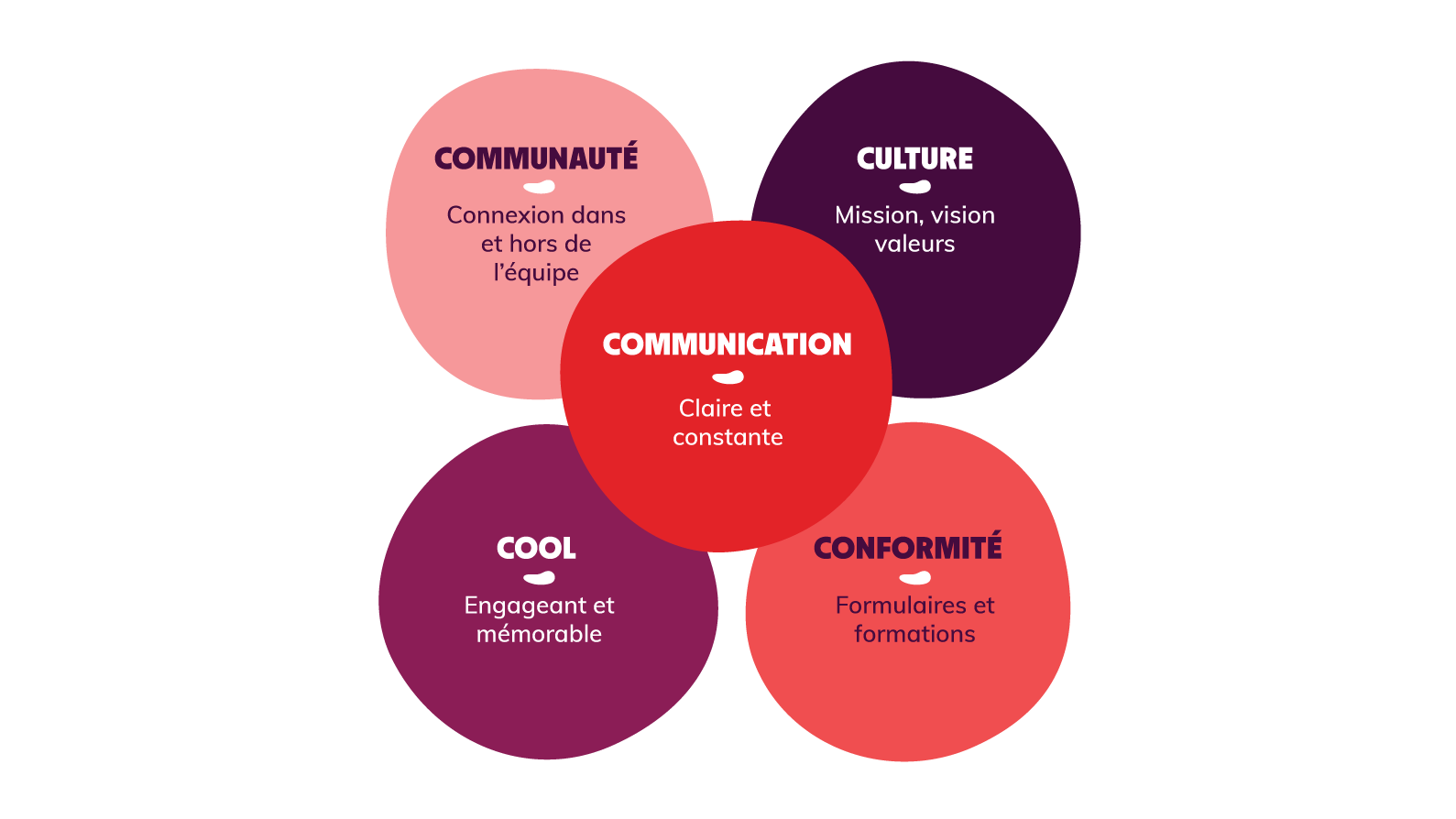
- Compliance: This first step involves legal administrative procedures, such as forms and documents to be completed. It is a necessary step, but frankly, it should not take up the entire first day of work. Why not automate this phase with the technologies available so that more time and resources can be devoted to the other four Cs, which are much more important?
- Communication: Transparent and continuous communication is essential for establishing trust. Keeping the lines of communication open is crucial. New recruits need to know that they can ask any questions they have without hesitation, so they can reach their full potential. No question is too silly.
- Culture: This refers to the organization’s DNA: mission, vision, values. How are teams structured, how are decisions made, what are the rituals that define collective life, etc.? This is what will define how your new recruits feel within the organization.
- Community: this is the sense of belonging, recognition, and appreciation that new recruits feel when they connect with the organization’s community. This goes far beyond their immediate team. When this bond is created, the new recruit knows they have chosen the right place to work.
- Be cool: yes, cool! The onboarding experience should be memorable. First impressions have a decisive impact on new recruits’ commitment. If the experience is positive and memorable, they will form a strong bond with the organization right from the start.
Moving from a process to an exceptional onboarding experience
The goal is not just to have an onboarding process, but to offer a real experience. Why? Because it really helps new employees understand the organization’s culture and values more quickly. Instead of sitting through boring presentations, they will learn by doing, which will help them become more involved.
Here are a few ideas for a more experiential onboarding process:
- Use engaging videos to present the company’s mission, vision, values, and even employee testimonials. A short welcome message from management also goes a long way!
- Create memorable and interactive moments: a group activity such as an escape game, a happy hour, an interdepartmental treasure hunt, or even a coffee chat with a member of management… Be creative and provide opportunities to get to know each other!
- Set up a mentoring program: Joining a new team can be intimidating at first, so why not pair new recruits with colleagues who have been there for a long time? This will make it easier for new recruits to integrate by providing them with valuable support.
Coming back to our famous employer brand… Onboarding is also when new recruits see the employee value proposition (EVP) in action. It is no longer just a promise, but a reality experienced on a daily basis. So make sure your onboarding experience is perfectly aligned with your EVP.